
Introduction
Understanding why most dropshipping stores fail is more valuable than learning success stories alone.
Many beginners enter dropshipping with unrealistic expectations and incomplete knowledge.
Failure usually comes from avoidable decisions, not from the business model itself.
This article explains the real reasons stores struggle and shut down.
1. Why Do Most Dropshipping Stores Fail?
Most dropshipping stores fail due to poor planning, weak customer trust, lack of business fundamentals, and unrealistic expectations. Many sellers underestimate operational responsibilities, overestimate short-term profits, and ignore long-term consistency, leading to unsustainable businesses.
2. Unrealistic Expectations From the Start
Many beginners expect fast results.
Dropshipping is often misunderstood as a low-effort business, but in reality, it requires continuous testing, decision-making, and operational management.
In reality, it requires time, testing, and adjustment.
When results don’t appear quickly, motivation drops and stores are abandoned.
3. Weak Product Research

Poor product decisions are a common cause of failure.
Some sellers choose products based on trends without considering demand stability.
Others ignore competition and pricing realities.
Without proper research, even well-designed stores struggle to convert.
4. Low Customer Trust and Credibility
Trust is critical in ecommerce.
New stores often fail to clearly explain policies, shipping timelines, and support options.
This creates hesitation and reduces conversions.
Customers avoid stores that feel uncertain or incomplete.
5. Overreliance on Suppliers
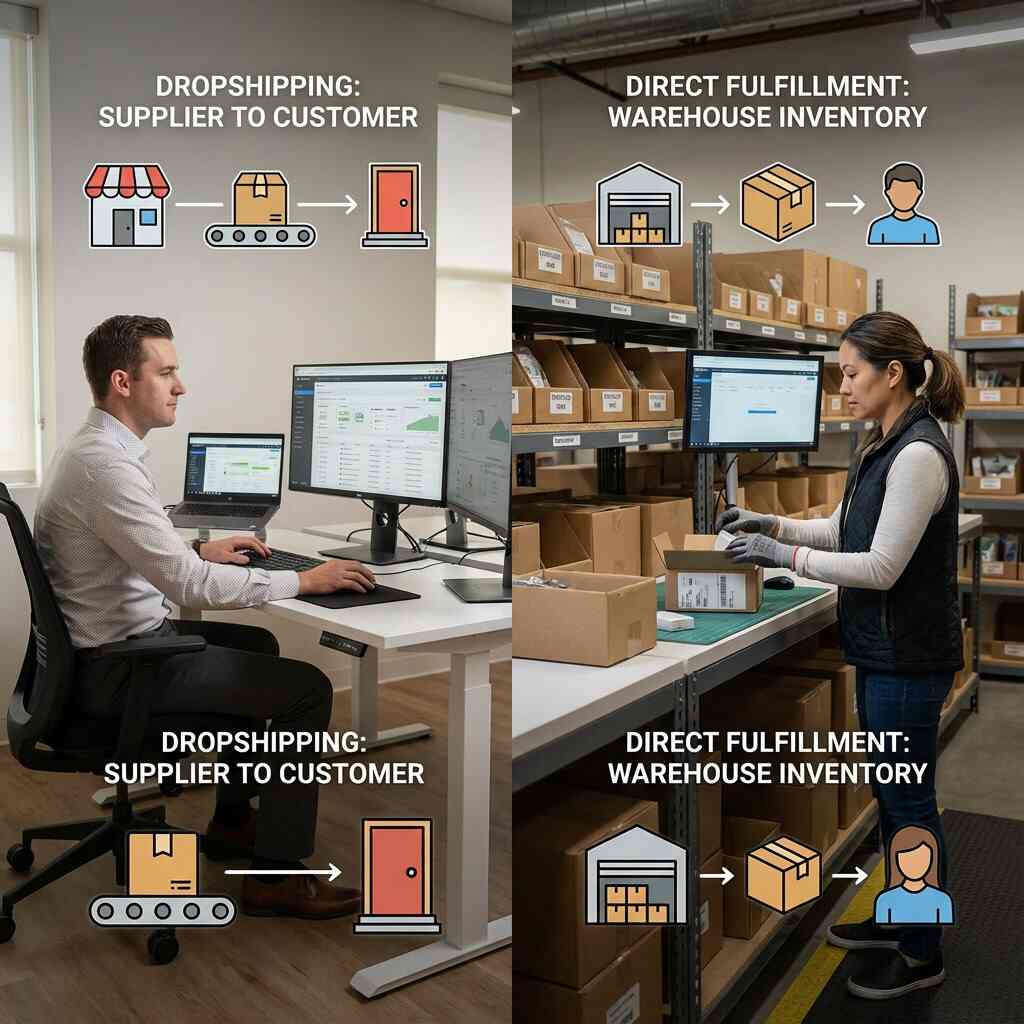
Suppliers handle fulfillment, but sellers remain responsible.
When suppliers delay orders or send incorrect items, customers blame the store.
Without backup plans, small issues escalate quickly.
This dependency increases operational risk.
6. Poor Customer Support Management
Customer support is often underestimated.
Even low order volume generates questions and complaints.
Slow or unclear responses damage reputation.
Unresolved issues lead to refunds, disputes, and negative feedback.
7. Pricing Without Strategy
Many sellers compete only on price.
Extremely low pricing reduces profit margins and limits sustainability.
It also attracts price-sensitive customers who are harder to retain.
Without pricing strategy, long-term growth becomes difficult.
8. Ignoring Legal and Compliance Responsibilities
Some stores fail due to compliance issues.
Common problems include unclear refund policies, misleading product descriptions, and tax misunderstandings.
These issues can lead to account restrictions or legal trouble.
Compliance is part of operating any real business.
Clear refund and return policies are a legal requirement in many regions and directly impact customer trust.
9. Poor Long-Term Planning
Dropshipping stores often fail because there is no plan beyond the first sale.
Sellers focus on launching but not on improving systems.
There is little effort to refine products, support, or customer experience.
Without planning, growth becomes unstable.
10. Treating Dropshipping as a Shortcut, Not a Business
This is the most common reason.
Dropshipping is a fulfillment method, not a guarantee of success.
Stores fail when sellers avoid responsibility and decision-making.
Those who treat it like a real business last longer.
11. Real Example: Why a Beginner Dropshipping Store Fails
To understand failure clearly, consider a typical beginner scenario.
A new seller launches a store with:
- A trending product
- A basic theme
- No clear brand identity
They start running ads immediately.
What goes wrong:
I. Low conversion rate
Visitors don’t trust the website.
II. High ad costs
Clicks increase, but sales don’t.
III. No optimization
The seller doesn’t improve product page or offer.
IV. Early quitting
After spending money with no return, the store is abandoned.
👉 This is not bad luck — it’s lack of system and understanding.
12. The Hidden Costs Beginners Ignore
Many beginners calculate only product cost.
But real dropshipping includes:
- Advertising costs (biggest expense)
- Payment gateway fees
- Refunds and chargebacks
- Customer support time
- App or tool subscriptions
👉 Example:
Product cost = $10
Selling price = $25
Looks like profit = $15
But reality:
- Ads = $8–12
- Fees = $2–3
👉 Actual profit = $2–5 or loss
13. Why Traffic Alone Does Not Fix a Failing Store
Many beginners think:
“I just need more traffic”
This is wrong.
If your store has:
- Poor design
- Weak product page
- No trust signals
👉 More traffic = more loss
Because:
- You pay for every click
- But visitors don’t convert
Conversion matters more than traffic.
14. The Role of Branding in Dropshipping Success
Most failing stores look identical.
Same:
- Product images
- Descriptions
- Layout
Customers notice this.
Strong stores focus on:
I. Unique product presentation
II. Clear brand identity
III. Consistent messaging
Branding increases:
- Trust
- Conversion rate
- Customer retention
15. The Difference Between Short-Term and Sustainable Stores
Failing stores:
- Focus on one product
- Run ads quickly
- Quit quickly
Sustainable stores:
- Test multiple products
- Improve gradually
- Focus on long-term systems
👉 Success is not one product
👉 It’s a process
16. Key Signs Your Dropshipping Store Is Failing
Recognizing problems early helps fix them.
Common warning signs:
- High traffic but no sales
- Frequent refunds
- Low customer engagement
- High bounce rate
- Increasing ad costs
👉 These indicate system problems, not bad luck
17. How to Reduce Failure Risk (Practical Strategy)
Instead of chasing quick success:
I. Start with research
Understand market, pricing, and competition.
II. Build trust first
Policies, design, and transparency matter.
III. Test before scaling
Small tests prevent big losses.
IV. Focus on improvement
Winning stores evolve over time.
Conclusion
The reasons why most dropshipping stores fail are largely preventable.
Failure usually comes from poor expectations, weak trust, and lack of preparation.
Dropshipping works best when approached with patience, responsibility, and realistic planning.
Understanding the real challenges is the first step toward sustainability.
FAQs
Is dropshipping failure common?
Yes. Many stores fail early due to unrealistic expectations and poor execution.
Can dropshipping succeed long term?
Yes, when treated as a real business with proper planning and customer focus.
What is the biggest mistake new dropshippers make?
Believing dropshipping requires little effort or responsibility.
Do all dropshipping stores eventually fail?
No. Stores that adapt, improve, and manage risks can operate sustainably.

Founder of HireEcomExperts.com — a platform helping online entrepreneurs find trusted Fiverr freelancers for Shopify, dropshipping, Amazon FBA, and digital marketing. Website Developer and SEO specialist with hands-on experience in ecommerce growth strategies.