
Dropshipping Pros and Cons: An Honest Breakdown for Beginners in 2026
By Ikram Khan | HireEcomExperts.com
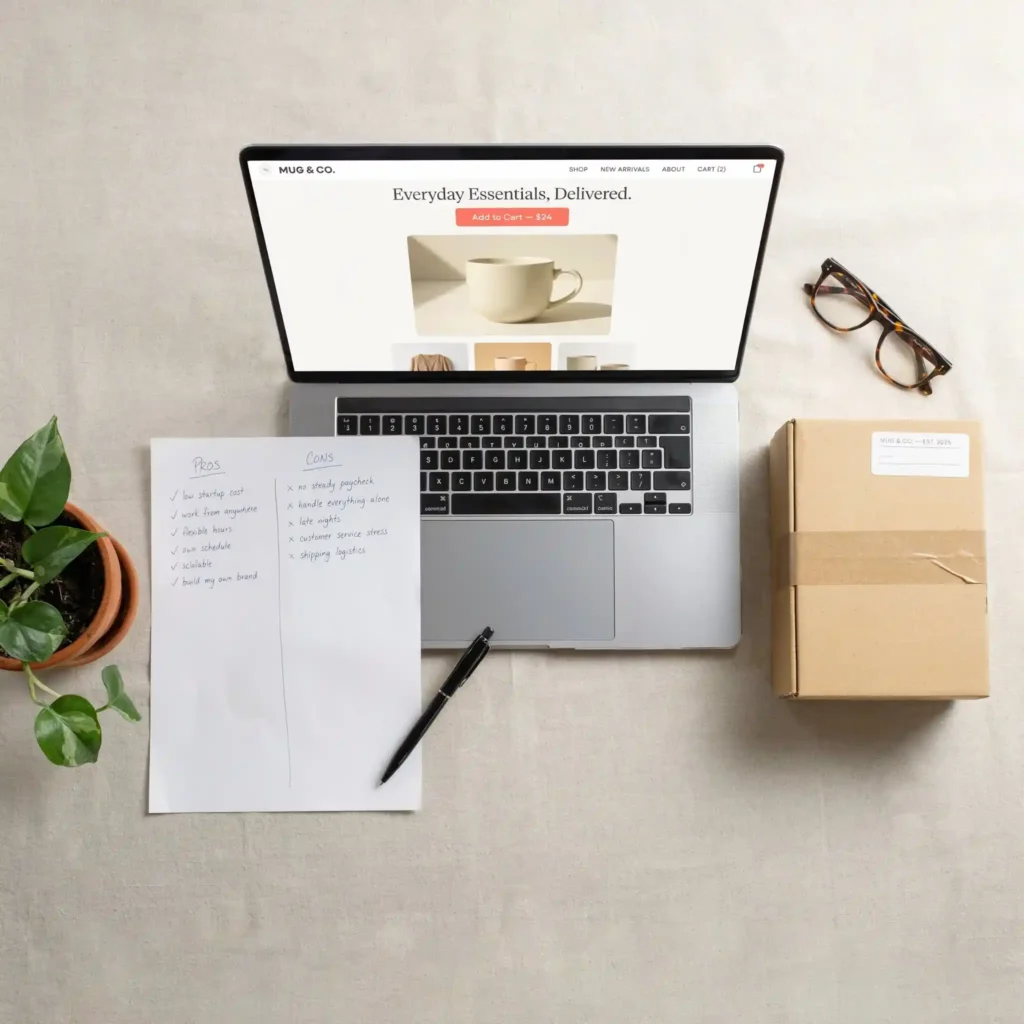
Every week, someone searches “is dropshipping worth it in 2026” and lands on an article that either oversells the model or tears it apart completely. Neither extreme is honest, and neither is actually useful if you are trying to make a real decision.
This guide takes a different approach. Rather than listing pros and cons as abstract bullet points, it explains the real mechanics behind each one — what the advantage actually means in practice, where the disadvantage really comes from, and what you can do about it. The goal is to give you an accurate picture so you can decide whether dropshipping fits your specific situation, not whether it fits someone else’s success story.
This article is written from a research and web development perspective. As someone who builds ecommerce websites and studies how these platforms work technically, I have spent considerable time understanding the gap between how dropshipping is marketed and how it actually functions as a business model. The numbers and market data cited here come from publicly available industry reports, which I link to directly.
What Is Dropshipping — In One Honest Paragraph
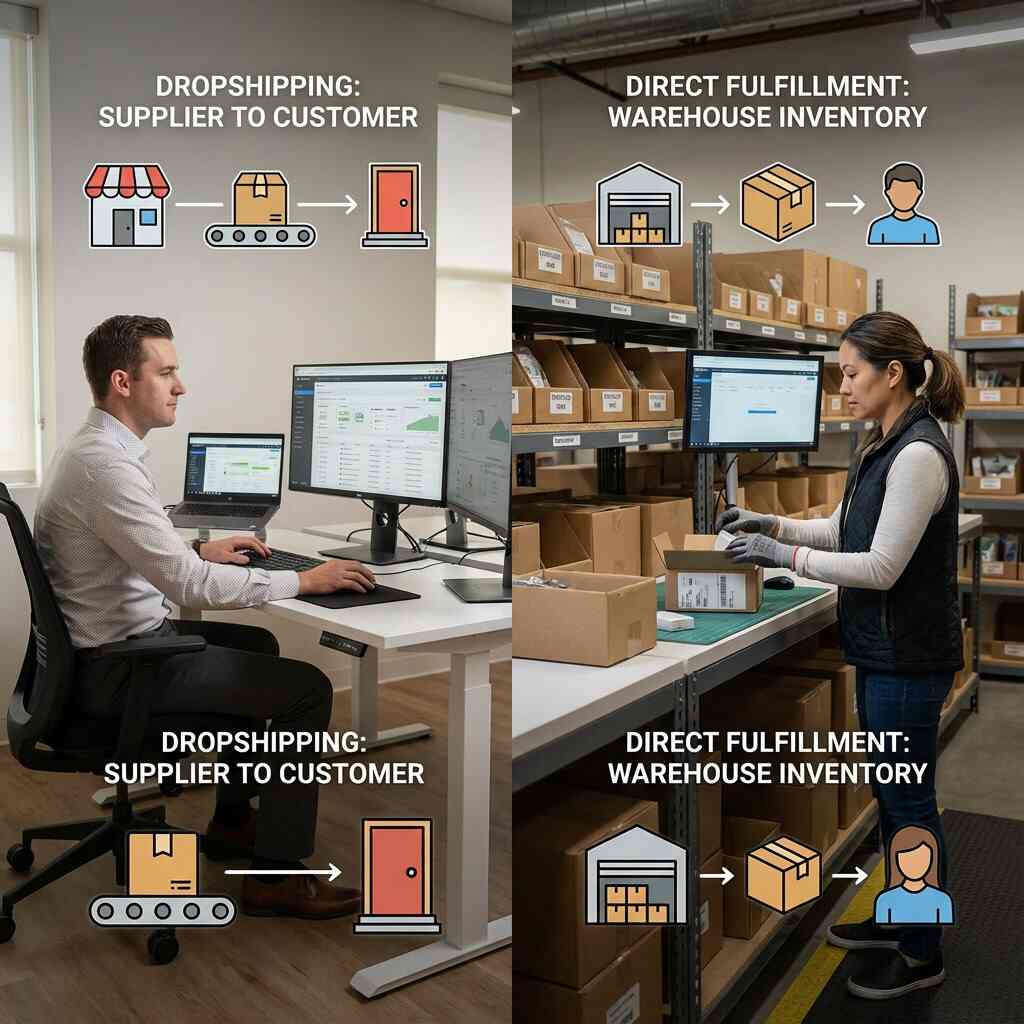
Dropshipping is an ecommerce model where you sell products through an online store without physically holding any inventory. When a customer places an order on your store, you purchase the product from a third-party supplier who ships it directly to the customer. Your profit is the difference between what the customer paid you and what you paid the supplier — minus all your other costs, which we will get to.
The global dropshipping market is projected to exceed $400 billion and is growing, which tells you the model is not disappearing. But growth in a market does not automatically mean it is easy to profit from. Understanding why requires looking at both sides clearly.
The Real Pros of Dropshipping
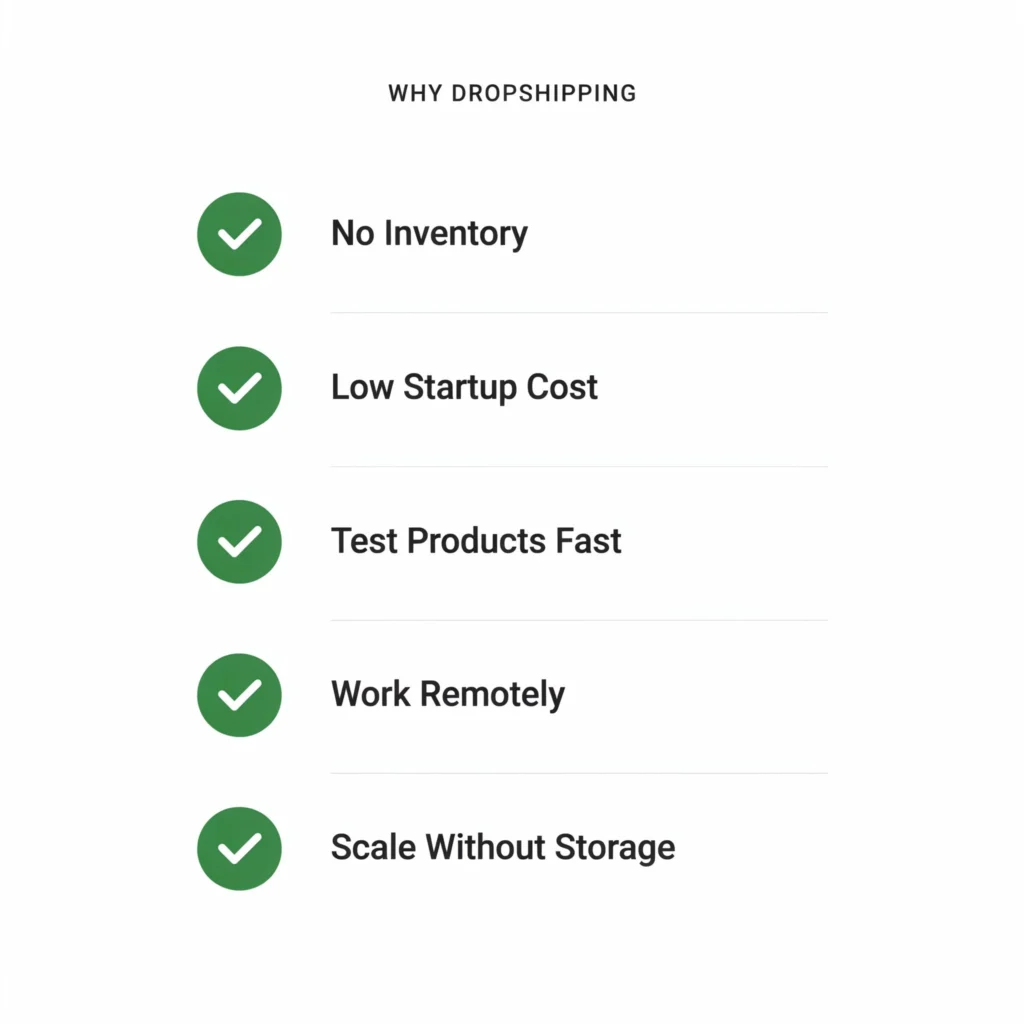
1. The Startup Cost Advantage Is Real — But Has a Ceiling
The most commonly cited advantage of dropshipping is low startup cost, and this one is genuinely true — with an important qualification.
You can launch a Shopify dropshipping store for approximately $100 to $500 in the first month. That covers your Shopify subscription (around $39/month on the Basic plan), a domain name (around $15/year), and a basic theme. Compare this to traditional retail, where buying wholesale inventory typically requires a minimum investment of $2,000 to $10,000 just to stock a small product range, plus storage costs.
The qualification is this: the low startup cost refers to the website and infrastructure, not the full cost of running the business. Most beginners discover within the first month that paid advertising — primarily Facebook or TikTok ads — is essentially required to drive traffic to a new store with no organic audience. A realistic early-stage advertising budget runs $300 to $1,000 per month while you are testing products and optimizing campaigns.
So the actual first-month cost for a properly run dropshipping operation is closer to $400 to $1,500, not $100. Still significantly lower than traditional retail, but not the “start with $50” figure that gets repeated in YouTube tutorials.
2. No Inventory Management Is a Genuine Operational Advantage
Not holding physical inventory removes a significant category of complexity from your business. There are no warehouse costs, no storage fees, no risk of products sitting unsold, and no logistics involved in packing and shipping orders yourself.
With dropshipping, you avoid the financial risk of unsold inventory entirely — there are no storage costs and no requirement to clear stock you can no longer sell. For anyone starting out without experience in inventory management, this is a genuinely meaningful advantage. Inventory management done poorly is one of the most common reasons traditional retail businesses fail early.
The practical implication is that your focus as a dropshipper shifts entirely to customer-facing activities: product selection, store design, marketing, and customer service. These are learnable skills. Managing a warehouse full of products you bought in advance while also trying to learn marketing is considerably more challenging.
3. Product Testing Speed Is Where Dropshipping Has a Real Edge
This is the advantage that experienced ecommerce operators most consistently cite as valuable, and it is often underappreciated by beginners who focus on the income potential instead.
In a traditional ecommerce model, testing whether a new product will sell requires buying it in bulk first — often a minimum order of 100 to 500 units. If the product does not sell, you are left with inventory you cannot move. In dropshipping, you can list a new product and run ads to test demand with zero inventory commitment. If it converts, you scale. If it does not, you remove the listing and test the next product.
Shipping options have diversified and sped up, with many dropshipping suppliers now offering faster delivery methods and localized warehouses to shorten transit times, which has partially addressed the historical weakness of slow delivery in product testing scenarios.
This testing flexibility is particularly useful for entrepreneurs who are still figuring out what niche they want to operate in. Dropshipping lets you run real market experiments with real customers before committing to a single product category.
4. Location Independence Is Practical, Not Just Theoretical
Because you are not managing physical inventory and do not need to be present at a warehouse or shipping facility, a dropshipping business can genuinely be run from anywhere with a reliable internet connection. Order management, supplier communication, customer service, and advertising can all be handled remotely.
This is one of the few business models where the location independence claim is actually accurate for most operational tasks, not just theoretically possible but practically cumbersome.
5. Scalability Without Proportional Cost Increase
In most businesses, scaling revenue requires scaling costs proportionally — more products sold means more staff, more warehouse space, more logistics complexity. In dropshipping, the supplier handles the additional fulfillment volume. Your operational costs do not increase proportionally when orders increase.
Scaling a physical retail store means hiring staff and renting more space, but with dropshipping, scaling is more digital than physical — you can add new product lines, target different audiences, or expand to global markets without the operational overhead increasing in lockstep.
The practical ceiling on this scalability is your ability to manage customer service volume and advertising spend efficiently as orders grow. These costs do increase, but more gradually than the fulfillment-related costs in traditional models.
The Real Cons of Dropshipping — With Actual Numbers
1. Profit Margins Are Tighter Than They First Appear
This is the most important practical reality of dropshipping, and most guides explain it poorly. Here is what the actual math looks like.
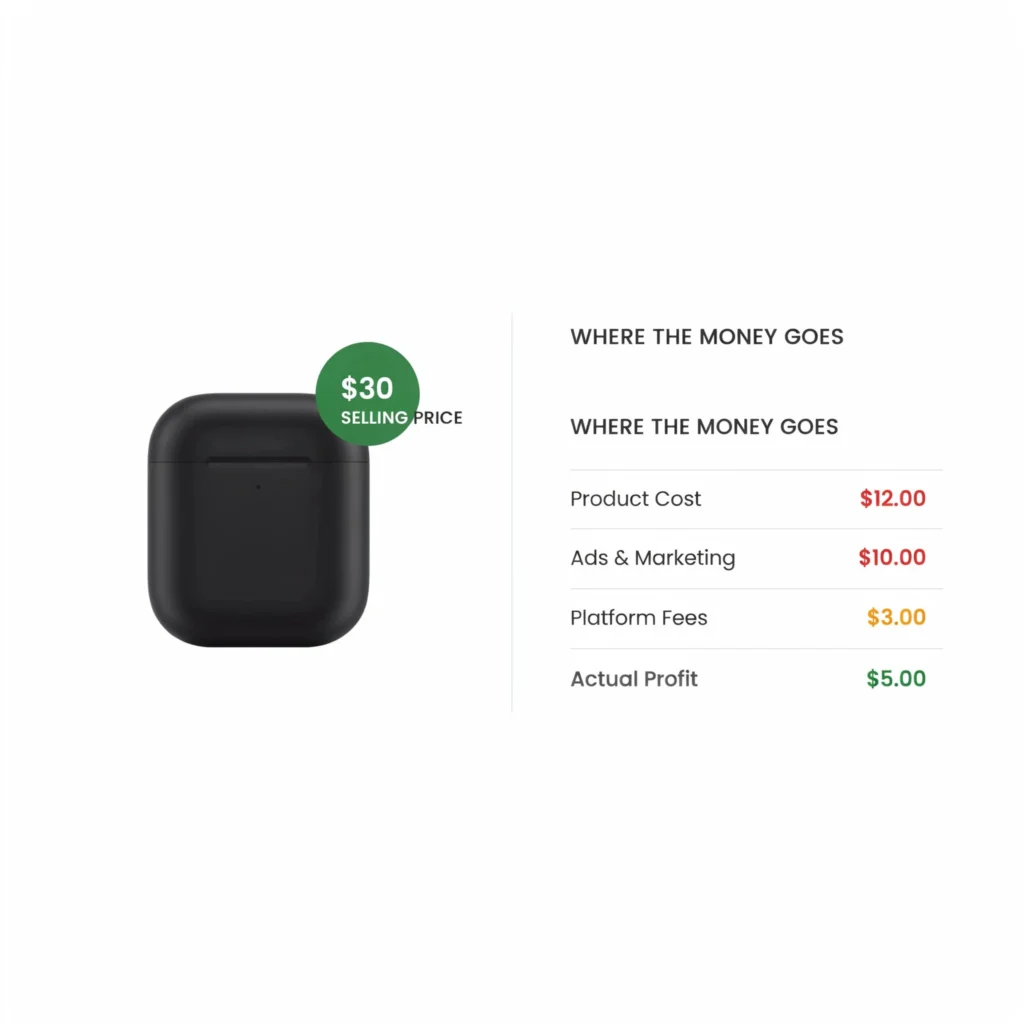
A beginner sees a product on AliExpress or a supplier platform for $12. They list it in their store for $30. On paper, that looks like an $18 profit. The real calculation looks different:
| Cost Item | Amount |
|---|---|
| Product cost from supplier | $12.00 |
| Shipping from supplier | $3.00 |
| Facebook/TikTok ad spend (per sale) | $8–$15 |
| Shopify transaction fee (2% on Basic) | $0.60 |
| Payment processing fee (Stripe/PayPal ~3%) | $0.90 |
| Total costs | $24.50–$31.50 |
| Selling price | $30.00 |
| Actual profit | $-1.50 to $5.50 |
You’ll deal with tight profit margins and rely on suppliers for timely deliveries, and competition is fierce, so you’ll need clever marketing or a unique brand to differentiate.
The way experienced dropshippers address this is through higher average order values (bundles, upsells), better ad targeting efficiency over time, and moving to suppliers with better pricing as volume increases. But in the early stages, many beginners are operating at or near breakeven while they figure out these optimizations.
Industry data suggests dropshipping profit margins typically run between 10% and 30% on revenue — meaning on a $30 sale, your realistic net profit target after all costs is $3 to $9, not $18. Working with fulfillment partners that offer competitive pricing below standard marketplace rates, combined with upsells and free-shipping thresholds to increase average order value, is how experienced operators push margins up.
2. Supplier Dependency Creates Risks You Cannot Directly Control
Your entire operation depends on your supplier doing their job correctly. When they do not — and eventually, every supplier has issues — the problem lands on your store’s reputation, not theirs.
Common supplier problems that directly affect your business include: items going out of stock after you have been successfully advertising them, shipping delays beyond what was promised, product quality inconsistencies between batches, and suppliers simply disappearing or going out of business.
Dropshipping’s limitations emphasize the need for reputable suppliers, automation tools, and strong brand strategies to maintain competitiveness and customer satisfaction.
The practical mitigation is to always have at least two suppliers who can fulfill each of your core products, and to order test samples before scaling advertising for any product. This adds cost and time upfront but significantly reduces the risk of a supplier failure derailing a campaign that is generating sales.
3. Customer Experience Is Entirely Your Responsibility Despite Limited Control
This is the con that most beginners underestimate most severely, and it is the one most directly connected to whether a dropshipping business survives its first year.
When a customer’s order arrives three weeks late, they contact your store. When the product quality does not match the photos, they contact your store. When the wrong item arrives, they contact your store. In every case, your supplier caused the problem, but your customer holds you responsible — because from their perspective, they bought from you.
Amazon reports that 34% of its sales come from dropshipping arrangements, which shows the model can work at scale — but Amazon has the customer service infrastructure, the brand trust, and the logistics relationships to manage these situations effectively. A new dropshipping store has none of those advantages.
Managing customer expectations proactively — clear delivery timeframes on every product page, a detailed FAQ about shipping, responsive customer service, and a straightforward refund policy — is what separates dropshipping stores that build repeat customers from those that burn through traffic without retention.
4. Competition Is Structural, Not Just Situational
Because the barrier to entry is low, the competitive environment in most dropshipping niches is intense and tends to get more competitive over time, not less. The barrier to entry is low, which attracts competition, and winning requires differentiation that takes real effort.
What this means practically is that any product you find that is currently profitable will attract competitors who copy the exact same store design, product listing, and advertising angle. The stores that survive this are the ones that build something genuinely harder to copy: a brand identity, an audience, a content strategy, or better customer service. These take time and investment to develop.
5. Platform Dependency Is a Real Business Risk
Most dropshipping stores depend on a combination of a single ad platform (usually Facebook or TikTok) for traffic and a single supplier platform (AliExpress or similar) for products. When either platform changes its algorithm, increases its costs, or restricts certain ad types — and all of them do this periodically — it can significantly impact a business that has not diversified.
This is not a reason to avoid dropshipping, but it is a reason to treat diversification of traffic sources and supplier relationships as a priority from the beginning rather than an afterthought.
What Competitors Are Not Telling You — 3 Things Most Guides Skip
After reviewing multiple competitor articles on this topic, here are three things almost none of them explain that actually matter:
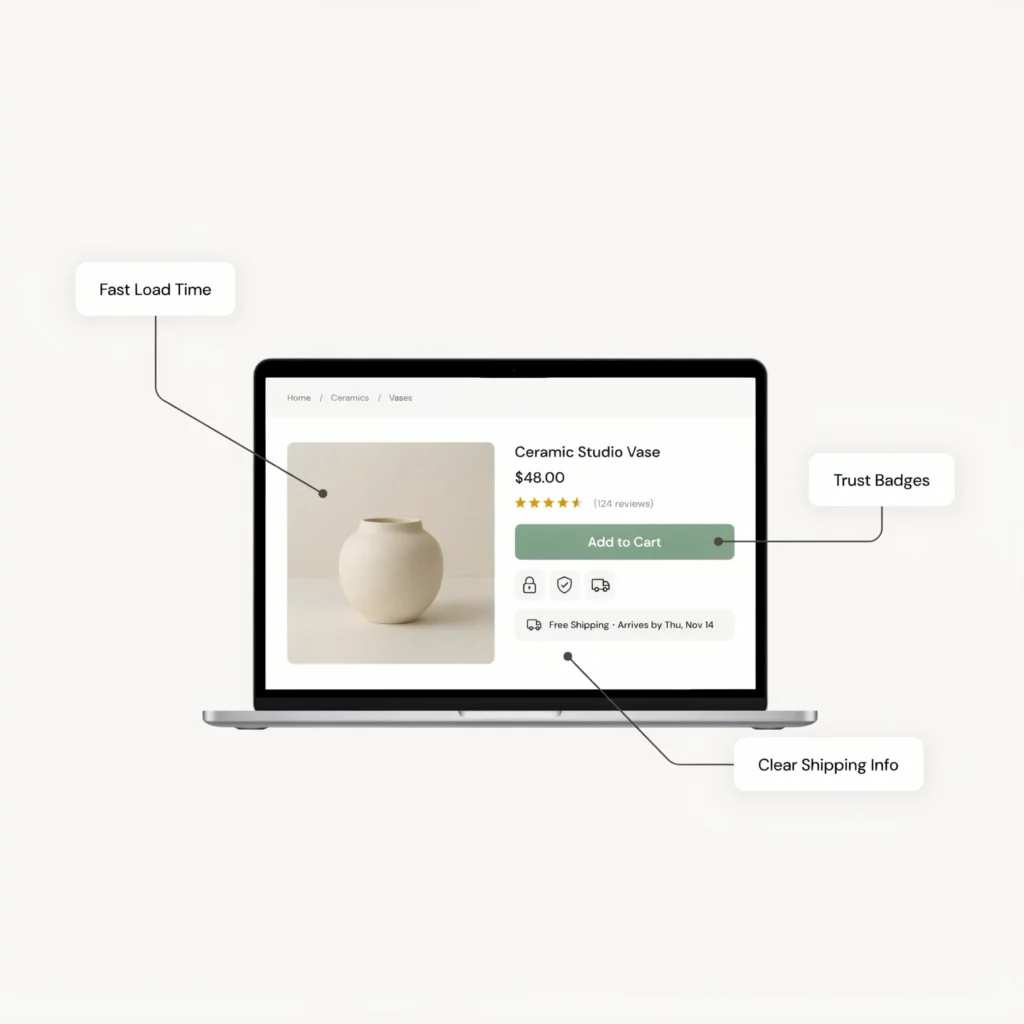
The website itself is where most dropshipping businesses fail technically, not in the business model. As someone who builds ecommerce websites, the most consistent pattern I see is beginners using the cheapest theme available, ignoring page speed, and launching stores that load in 5+ seconds on mobile. A store with a 5-second load time loses approximately 90% of mobile visitors before they see a single product, according to Google’s page speed research. The dropshipping model can be perfectly sound, but if the technical execution of the store is poor, the business model never gets a fair chance.
The “location independence” advantage depends on your customer’s timezone. If you are selling to US customers from Pakistan or another Asian timezone, you are essentially working the night shift to handle customer service during US business hours. This is manageable, but it is a practical reality that the “work from anywhere” narrative glosses over.
Supplier lead times vary enormously and this directly affects your advertising strategy. A product shipping from a Chinese supplier to a US customer can take 7 to 30 days depending on the shipping method. Running ads that generate orders with 3-5 week delivery times creates a customer experience problem that your reviews will reflect permanently. Choosing suppliers with US or EU warehouses for faster delivery is the solution, but it usually means higher product costs — which directly compresses the margins discussed above.
Is Dropshipping Worth Starting in 2026? An Honest Assessment
Dropshipping still offers compelling advantages in 2026, especially for newcomers or those testing products, but it also comes with new challenges. The honest answer to whether it is worth it depends almost entirely on what you are trying to accomplish and what resources you bring to it.
Dropshipping makes sense if you want to learn ecommerce without the risk of buying inventory, you have time to invest in product testing and advertising optimization, you understand the realistic profit margins from the start rather than expecting the “$18 profit on a $30 sale” scenario, and you are willing to treat it as a real business that requires consistent work, not a passive income setup.
Dropshipping makes less sense if you expect quick profits without a significant time investment in learning digital advertising, you need consistent income immediately rather than being able to fund a 3-to-6-month learning period, or you want to build a brand with specific quality standards that depend on controlling the product and fulfillment.
For entrepreneurs who want to understand how to build the technical side of a dropshipping store properly — including platform choice, page speed, and product page structure — the guides in the Dropshipping Learning Hub on this site cover the website development side in detail. And if you are comparing dropshipping to traditional ecommerce to decide which model fits your situation, this dropshipping vs traditional ecommerce comparison breaks down the differences clearly.
For those who want to understand the common misconceptions that derail beginners before they even get started, the common dropshipping myths article addresses the most damaging ones directly. And if you reach the point where you are ready to hire a Shopify or WooCommerce developer to build your store properly, the hire ecommerce experts page has resources for finding and evaluating the right technical help.
Dropshipping Pros and Cons — Summary Table
| Factor | Reality in 2026 |
|---|---|
| Startup cost | $100–$500 for infrastructure; $400–$1,500 realistically with ads |
| Profit margins | 10–30% of revenue after all costs |
| Inventory risk | None — genuine advantage |
| Supplier risk | Significant — requires active management |
| Competition level | High in most niches — differentiation is essential |
| Time to profitability | Typically 3–12 months with consistent effort |
| Customer service burden | Full responsibility despite limited fulfillment control |
| Scalability | Good — fulfillment scales without proportional cost increase |
| Location independence | Genuinely true for most operations |
Frequently Asked Questions
Is dropshipping still profitable in 2026?
Yes, but profitability requires understanding the real cost structure from the beginning. Stores that account for advertising costs, transaction fees, and supplier pricing realistically — and that build toward higher average order values and repeat customers — can achieve sustainable profit margins. Stores built on the assumption of $15+ profit per sale without factoring in advertising costs usually struggle within the first few months.
How much money do I need to start dropshipping?
A realistic minimum is $400 to $800 for the first month, covering platform fees, a domain, and an initial advertising budget to test one or two products. Attempting to start with less than this typically means insufficient testing budget to identify a converting product before running out of funds.
What is the biggest mistake beginners make in dropshipping?
Based on the pattern of how beginners approach the model, the most common mistake is spending more time choosing products than building a store that converts visitors into buyers. A technically poor store — slow loading, unclear product descriptions, no trust signals — will fail even with a good product. Get the technical foundation right first.
ow do I choose a reliable dropshipping supplier?
Order test samples before advertising any product. Check reviews of the supplier specifically for their delivery times to your target customer’s country. Look for suppliers who have been operating on the platform for at least one to two years with a substantial order history. For US customers, prioritize suppliers with US warehouse options even if the product costs more.
Can I do dropshipping from Pakistan?
Yes. The business model is geography-independent from an operational standpoint. The main practical considerations are payment processing (Payoneer is the most accessible withdrawal method for Pakistani sellers), customer service timezone management for US or European customers, and ensuring your advertising accounts are set up correctly for international targeting. None of these are insurmountable obstacles.
Should I use Shopify or WooCommerce for dropshipping?
Both work for dropshipping. Shopify has a lower technical barrier to entry and better native integrations with dropshipping apps. WooCommerce offers more customization and lower ongoing costs if you already have WordPress hosting. The WooCommerce vs Shopify comparison on this site covers the technical differences in detail.
Ikram Khan is a web developer and the founder of HireEcomExperts.com. This article is based on industry research, publicly available market data, and technical analysis of ecommerce platforms. Market figures are sourced from publicly available reports from Shopify, DHL, and industry analysts as linked throughout the article.

Founder of HireEcomExperts.com — a platform helping online entrepreneurs find trusted Fiverr freelancers for Shopify, dropshipping, Amazon FBA, and digital marketing. Website Developer and SEO specialist with hands-on experience in ecommerce growth strategies.