Introduction
Many beginners hear about WordPress but don’t fully understand what WordPress is or why it’s so widely used.
Some think it’s only for blogs, while others assume it requires technical skills.
In reality, WordPress is a system designed to make website creation and content management easier for non-technical users.
Understanding how it works helps beginners make better decisions when starting a website.
1. What Is WordPress?
WordPress is a content management system that allows people to create, manage, and publish websites without needing to write code. It provides a structured way to add pages, publish articles, manage media, and organize content through a simple dashboard interface.
2. What Does “Content Management System” Mean?
A content management system, often shortened to CMS, is software that helps manage digital content.
I. Content creation
Users can write text, upload images, and publish pages using a visual editor.
II. Content storage
All content is stored in a database rather than individual files.
III. Content display
WordPress automatically displays content to visitors in a readable layout.
This system removes the need to manually build pages using programming languages.
3. How WordPress Works Behind the Scenes
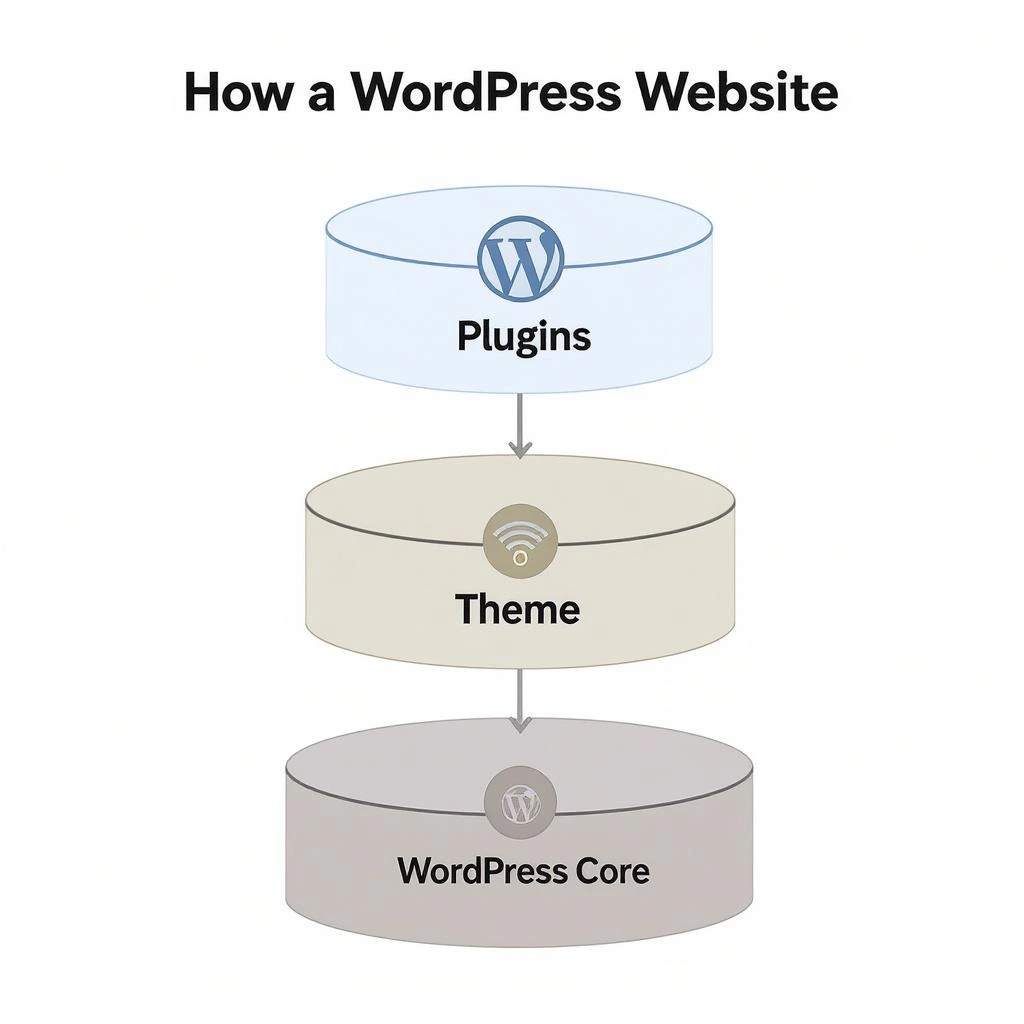
WordPress works by separating content, design, and functionality.
I. The dashboard
The dashboard is the control center where users manage content and settings.
II. Themes and appearance
Design is handled separately from content, allowing visual changes without rewriting pages.
III. Database-driven structure
When a visitor opens a page, WordPress pulls content from the database and displays it instantly.
This structure makes websites easier to update and maintain.
4. Examples of Websites Built With WordPress
WordPress powers a wide range of websites across different industries. Its flexibility allows individuals, businesses, and organizations to use the same platform for different purposes.
Some common examples include:
I. Personal blogs
Many writers and creators publish articles and tutorials using WordPress.
II. Business websites
Companies often use WordPress to present services, company information, and contact details.
III. News and media websites
Many online magazines and news platforms use WordPress because it supports frequent publishing.
These examples show that WordPress is not limited to one type of website.
5. Why WordPress Is Popular With Beginners
WordPress became popular because it lowers technical barriers.
I. Easy to learn
The interface is designed for non-technical users.
II. No coding required for basics
Most everyday tasks can be done visually.
III. Large learning ecosystem
Beginners can find documentation, guides, and community support easily.
This makes troubleshooting less intimidating.
6. Open-Source Nature of WordPress
WordPress is open-source software.
This means:
- The code is publicly available
- Anyone can use or modify it
- It is developed by a global community
According to the Wikipedia definition of WordPress, this open-source model is a key reason for its widespread adoption.
7. WordPress Content Structure Explained
WordPress organizes content into clear formats.
I. Posts
Posts are typically time-based entries, often used for blogs.
II. Pages
Pages are static and used for permanent content.
III. Categories
Categories help organize related content for better navigation.
This structure improves both usability and readability.
8. Publishing and Updating Content in WordPress
I. Drafting content
Users can save content as drafts before publishing.
II. Publishing
Once published, content becomes visible to visitors.
III. Editing existing content
Published content can be updated at any time.
This flexibility is useful for maintaining accuracy over time.
9. Common Misunderstandings About WordPress
I. “WordPress is only for blogs”
WordPress supports many website types.
II. “WordPress requires technical knowledge”
Basic use does not require coding skills.
III. “WordPress manages everything automatically”
Users still control content and structure.
Understanding these points helps set realistic expectations.
10. Is WordPress Suitable for Long-Term Use?
WordPress is designed for long-term publishing.
Many websites continue using it for years while expanding content and improving structure.
This makes it suitable for projects that grow gradually over time.
11. What a Typical WordPress Website Includes
A standard WordPress website usually contains several core components.
I. Homepage
The main page visitors see when entering the website.
II. Blog or articles section
A collection of posts that are updated regularly.
III. Informational pages
Pages such as About, Contact, or Services that provide permanent information.
IV. Media content
Images, videos, and downloadable files that support written content.
Understanding these components helps beginners visualize how WordPress websites are structured.
12. WordPress Plugins and Their Role
Plugins extend the functionality of a WordPress website. While the core WordPress system provides basic content management features, plugins allow users to add additional capabilities without modifying the core software.
I. Adding new features
Plugins can introduce features such as contact forms, SEO tools, image galleries, and security protection.
II. Improving website performance
Some plugins help optimize website speed, manage caching, and improve overall performance.
III. Enhancing website functionality
Website owners can install plugins for tasks like e-commerce, analytics tracking, social media integration, and backup management.
Because of this flexible plugin system, WordPress websites can be customized to meet different needs without requiring advanced technical knowledge.
13. WordPress Community and Ongoing Development
Another reason WordPress remains widely used is its strong global community.
I. Regular software updates
Developers continuously improve WordPress by releasing updates that enhance performance, security, and compatibility.
II. Community support
Users can find answers through forums, tutorials, documentation, and developer communities.
III. Continuous innovation
Because WordPress is open-source, developers around the world contribute improvements and new tools that help expand the platform’s capabilities.
This ongoing development ensures that WordPress remains relevant and reliable for website creation over time.
14. Advantages of Using WordPress
WordPress offers several advantages that make it one of the most widely used website platforms in the world. These benefits explain why beginners and experienced website owners continue to rely on it.
I. Flexibility
WordPress can be used for many types of websites, including blogs, business sites, portfolios, and online stores. Its flexible structure allows users to expand their websites as their needs grow.
II. Large Theme Library
Thousands of themes are available that control the visual appearance of a website. Users can change the entire design without affecting their content.
III. Strong Plugin Ecosystem
The large collection of plugins allows users to add features such as SEO optimization, contact forms, analytics tracking, and website security.
Because of these advantages, WordPress can adapt to many different website requirements.
15. Limitations Beginners Should Understand
Although WordPress is powerful, beginners should also understand some of its limitations. Knowing these points helps users make informed decisions when building their websites.
I. Requires maintenance
WordPress websites require occasional updates for the core software, themes, and plugins. Keeping everything updated helps maintain security and performance.
II. Plugin dependency
Many advanced features depend on plugins. Installing too many plugins can sometimes affect website performance if they are not managed carefully.
III. Learning curve for advanced features
While basic tasks are simple, advanced customization may require learning additional tools or concepts over time.
Understanding these limitations helps users manage their websites more effectively.
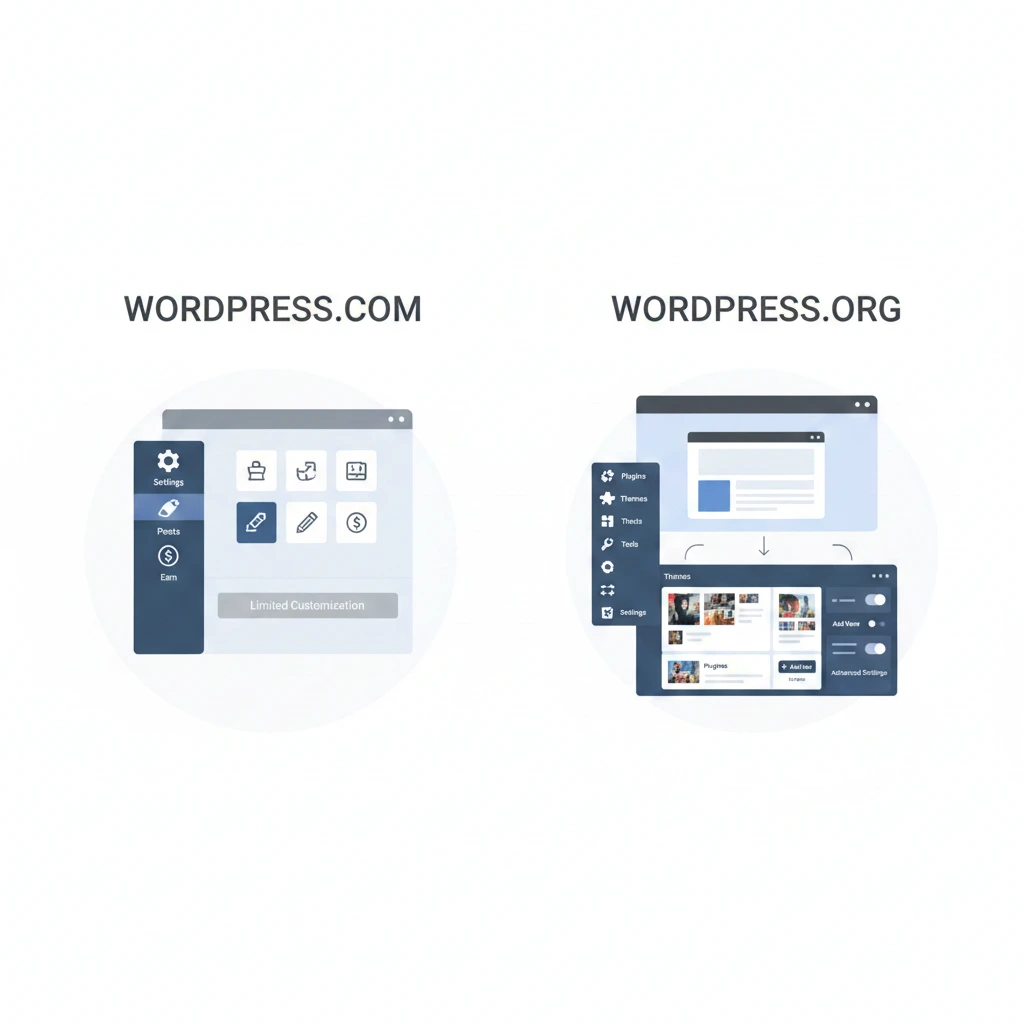
16. WordPress.com vs WordPress.org (Beginner Confusion)
Many beginners confuse WordPress.com and WordPress.org, but they are different services.
I. WordPress.com
WordPress.com is a hosted platform where the company manages the technical setup such as hosting and maintenance.
II. WordPress.org
WordPress.org provides the open-source WordPress software that users install on their own hosting server.
III. Control and customization
Websites built with WordPress.org generally offer more control, customization, and flexibility compared to hosted WordPress.com sites.
Understanding this difference helps beginners choose the right option when starting a website.
17. History of WordPress
Understanding the history of WordPress helps explain why it became one of the most widely used website platforms in the world.
I. Early development
WordPress was first released in 2003 as a blogging platform designed to simplify online publishing. The goal was to provide a user-friendly system that allowed people to publish content without technical barriers.
II. Expansion beyond blogging
Over time, WordPress evolved from a simple blogging tool into a full content management system. Developers added support for themes, plugins, and advanced customization.
III. Global adoption
Today, WordPress is used by millions of websites across different industries. Its open-source structure allows developers and contributors from around the world to improve the platform continuously.
This long development history has helped WordPress become a stable and reliable platform for website creation.
18. Who Should Use WordPress?
WordPress is suitable for many different types of users. Its flexible structure allows individuals and organizations to build websites based on their needs.
I. Bloggers and content creators
Writers, educators, and creators often use WordPress to publish articles, guides, and tutorials. The built-in content management features make it easy to organize and update posts.
II. Small businesses
Many small businesses use WordPress to create professional websites that present their services, products, and contact information.
III. Freelancers and professionals
Designers, photographers, consultants, and other professionals often use WordPress to create portfolio websites that showcase their work.
IV. Organizations and communities
Non-profit organizations, communities, and educational groups also use WordPress to publish information and manage online content.
Because of this wide range of use cases, WordPress can support both simple and complex websites.
19. Key Features of WordPress
WordPress includes several built-in features that help simplify website creation and management.
I. User-friendly dashboard
The WordPress dashboard allows users to manage content, settings, and media through a centralized interface.
II. Media management
Users can upload and organize images, videos, and documents directly within the WordPress media library.
III. Search engine friendly structure
WordPress is designed with a structure that supports search engine indexing and content organization.
IV. User role management
Website owners can assign different roles such as administrator, editor, author, and contributor. This allows multiple people to work on a website with controlled permissions.
These built-in features help WordPress remain a practical and efficient platform for website management.
Conclusion
Understanding what WordPress is helps beginners approach website creation with clarity.
WordPress simplifies content management without removing user control.
Its popularity comes from accessibility, flexibility, and structured content handling.
For beginners, it offers a practical foundation for building and managing a website.
FAQs
What is WordPress in simple terms?
WordPress is software that helps people create and manage websites without coding.
Is WordPress free to use?
The software itself is free, though running a website may involve other costs.
Can beginners use WordPress easily?
Yes. WordPress is designed to be beginner-friendly.
What can WordPress be used for?
It can be used for blogs, business sites, portfolios, and informational websites.
Does WordPress require programming skills?
No programming is required for basic usage.

Founder of HireEcomExperts.com — a platform helping online entrepreneurs find trusted Fiverr freelancers for Shopify, dropshipping, Amazon FBA, and digital marketing. Website Developer and SEO specialist with hands-on experience in ecommerce growth strategies.