
By Ikram Khan | HireEcomExperts.com Category: Dropshipping & Business Models Reading Time: ~12 minutes
What Is Dropshipping? Complete Beginner’s Guide (2026)
If you have been searching “what is dropshipping” and getting vague, confusing answers — this guide is for you.
By the end of this article you will know exactly how dropshipping works, how much money you realistically need to start, what profit margins look like with real numbers, the honest pros and cons, and whether it is actually worth starting in 2026.
No hype. No “get rich quick” language. Just a clear, honest explanation.
What Is Dropshipping?
Dropshipping is an ecommerce business model where you sell products online without ever buying or storing inventory yourself.
Here is what that means in practice:
- You create an online store (usually on Shopify)
- You list products from a supplier (like AliExpress or CJ Dropshipping)
- A customer buys a product from your store at your price
- You forward the order to the supplier and pay the supplier price
- The supplier ships the product directly to your customer
- You keep the difference as profit
Example: You sell a water bottle for $35. Your supplier charges you $12. You keep $23 minus any advertising costs.
You never see the product. You never pack a box. You never manage a warehouse. Your job is to run the store and bring in customers.
How Dropshipping Actually Works — Step by Step
Let’s walk through a real order from start to finish so you can picture exactly what happens.
Step 1: You Set Up Your Store
You create a Shopify store and choose a niche — for example, pet products, home decor, or fitness equipment. You import product listings from your supplier using an app like DSers (for AliExpress) or AutoDS.
Your store shows the product photos, description, and your selling price. Everything looks like a normal online shop to the customer.
Step 2: A Customer Places an Order
A customer finds your store through Instagram ads, TikTok, Google, or organic search. They buy a product and pay your full price including shipping. The money lands in your Stripe or PayPal account.
Step 3: You Forward the Order
Within your supplier app (DSers, AutoDS, Zendrop), you click to fulfil the order. The system sends the customer’s name, address, and the product details to the supplier. You pay the supplier’s price at this point.
Step 4: The Supplier Ships Directly to Your Customer
Your supplier packs and ships the order. They do NOT include their own branding — the package just arrives without identifying the original supplier. The customer receives what they ordered and thinks they bought it from your brand.
Step 5: You Handle Customer Service
If the customer has questions, complaints, or returns — that is your responsibility. You deal with the customer, and if needed, you deal with the supplier to resolve issues.
That is the complete cycle of one dropshipping order.
How Much Money Do You Need to Start Dropshipping?
This is the question most guides avoid answering honestly. Here is a realistic breakdown:
| Expense | Monthly Cost |
|---|---|
| Shopify Basic Plan | $29/month |
| Domain Name | ~$14/year (~$1.20/month) |
| Product Research Tool (optional) | $0–$50/month |
| Initial Test Ads Budget | $100–$300 (one-time to start) |
| DSers App (AliExpress) | Free |
| Total Realistic Starting Budget | $150–$400 |
You do NOT need to buy inventory upfront. You only pay the supplier when a customer orders. This is what makes dropshipping accessible for beginners.
However — and this is important — you will likely lose money on your first few ad campaigns while you are learning. Budget for testing, not just setup.
Real Profit Margins in Dropshipping
Dropshipping profit margins are lower than traditional ecommerce. Here is what realistic numbers look like:
Example Product: Posture Corrector Belt
| Item | Amount |
|---|---|
| Your Selling Price | $49.99 |
| Supplier Cost | $9.50 |
| Shipping Cost | $4.00 |
| Shopify Transaction Fee (2%) | $1.00 |
| Facebook/TikTok Ad Cost per Sale | $18.00 |
| Net Profit Per Sale | $17.49 |
| Profit Margin | ~35% |
This is a healthy dropshipping result. Many beginners start at 10–20% margins because their ad costs are higher while they are still learning.
What this means: If you make 10 sales per day at $17.49 profit, that is $174.90 per day or about $5,247 per month in profit before tax.
Is that possible? Yes. Is it guaranteed? Absolutely not. It takes product testing, ad optimisation, and time.
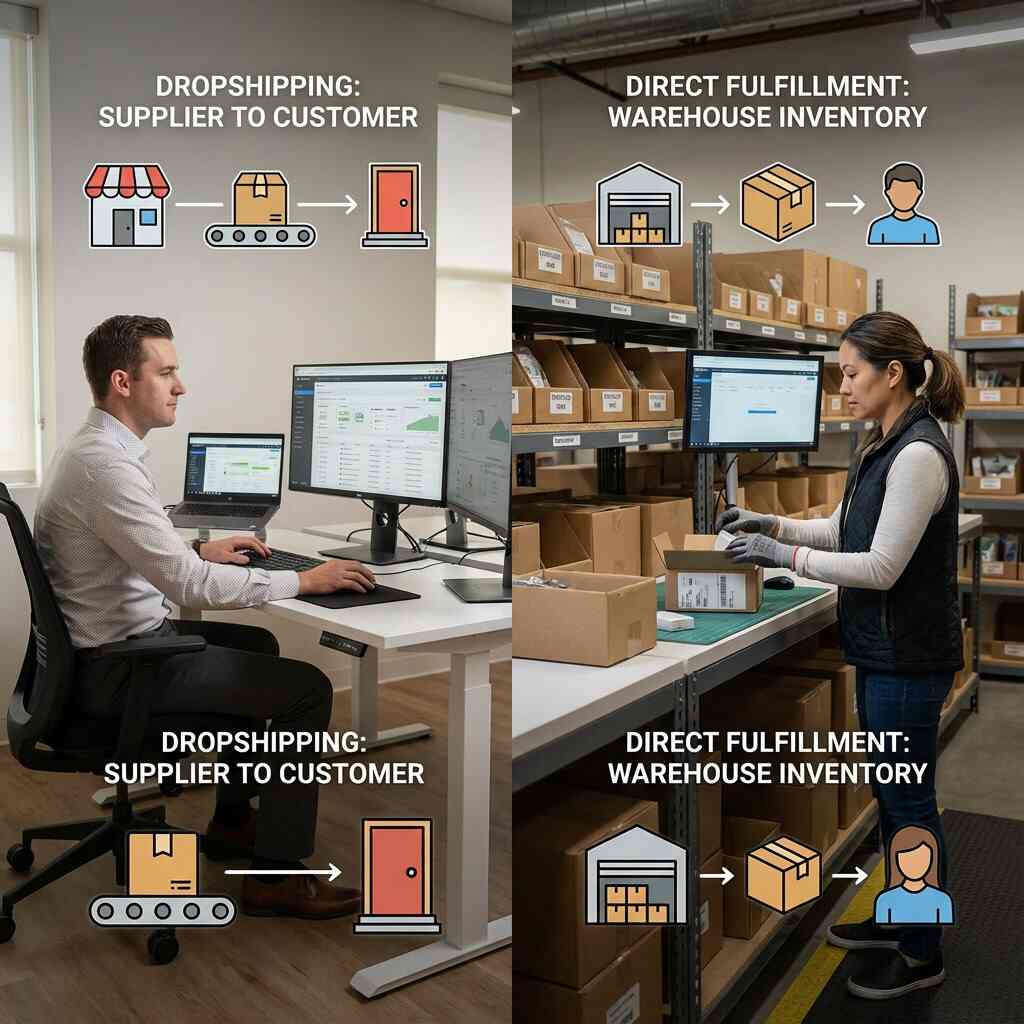
Dropshipping vs Traditional Ecommerce: What Is the Difference?
| Factor | Dropshipping | Traditional Ecommerce |
|---|---|---|
| Upfront Inventory Cost | $0 | $500–$10,000+ |
| Storage Required | No | Yes (warehouse or home) |
| Profit Margins | 15–40% | 40–70% |
| Shipping Control | Low (supplier ships) | High (you ship) |
| Risk Level | Low–Medium | Medium–High |
| Time to Launch | 1–2 weeks | 4–12 weeks |
| Branding Potential | Limited initially | Full control |
Dropshipping trades higher margins and control for lower risk and faster entry. For a beginner with limited capital, that trade-off often makes sense.
Here is full guide where you can learn the difference between dropshipping and traditional ecommerce.
The Honest Pros and Cons of Dropshipping
Most guides list pros and cons that sound like marketing copy. Here are the real ones.
Real Advantages
Low Financial Risk You do not spend thousands on inventory that might not sell. You test products with small ad budgets and only scale what works.
Location Independence You can run a dropshipping store from anywhere with a laptop and internet connection. Many sellers run successful stores while travelling or working part-time.
Easy Product Testing Want to know if a product will sell? List it and run $50 in ads. If it sells, scale up. If it does not, move to the next product. This speed of testing is impossible in traditional inventory models.
No Logistics Headaches You never pack boxes, visit post offices, or manage stock levels. The supplier handles all of that.
Scalable Without Proportional Cost Going from 10 orders per day to 100 orders per day does not require hiring staff or renting warehouse space — your supplier handles the extra volume.
Real Disadvantages (The Ones Nobody Tells You)
Lower Profit Margins Than You Expect When you subtract advertising costs, Shopify fees, and transaction fees, many beginners end up with 10–25% net margin. You need consistent volume to make meaningful income.
Shipping Times Can Destroy Your Reviews AliExpress suppliers often ship from China with 15–30 day delivery times. Western customers expect Amazon-speed delivery. Slow shipping leads to disputes, chargebacks, and negative reviews. Solution: use suppliers like CJ Dropshipping or Zendrop who have warehouses in the US/EU.
You Cannot Control Quality Your supplier ships the product. If it arrives damaged, the wrong size, or looks nothing like the photo — that is your customer’s problem and your refund to process. Always order samples before you scale any product.
You Are Not Building a Brand at First Customers buy from “some online store” and the packaging is generic. Building a real brand requires time, custom packaging (possible but costs more), and a loyal customer base.
Competition Is Real You are often selling the same product from the same AliExpress supplier as hundreds of other dropshippers. Your competitive advantage must come from better marketing, a better store design, or a more specific niche.
Profit Depends on Ad Performance Most dropshippers rely on paid ads (Facebook, TikTok, Google). If your ads stop performing — due to platform changes, rising ad costs, or audience fatigue — your sales can drop fast.
Dropshipping Myths That Need to Stop
In this article you can learn about the common myths that new seller believe in dropshipping.
Myth 1: “Dropshipping Is Passive Income” Running a dropshipping store requires daily work — checking orders, handling customer service, testing new products, optimising ads. It becomes more passive over time as you hire help, but not at the start.
Myth 2: “You Just Set Up a Store and Money Flows In” Traffic does not come automatically. You need to either pay for ads or spend significant time on SEO, social media, and content. Getting your first sale takes most beginners weeks or months.
Myth 3: “Dropshipping Is Dying” Dropshipping is not dying — low-quality dropshipping is dying. Stores with generic products, slow shipping, and no branding struggle. Stores with winning products, good supplier relationships, and real customer service still thrive.
Myth 4: “You Need No Skills” Successful dropshippers develop real skills: copywriting for product pages, reading Facebook/TikTok ad metrics, finding winning products, customer service, and basic store design. You can hire experts for most of these — but you need to understand them.
Myth 5: “Pick Any Product and You’ll Profit” Product selection is everything. Most dropshippers test 20–50 products before finding one that sells consistently. The skill of finding winning products is the most valuable skill in dropshipping.
Is Dropshipping Worth It in 2026?
Yes — with realistic expectations.
Dropshipping is worth starting in 2026 if:
- You have $300–$500 to invest in testing (not just setup)
- You are willing to learn ad marketing or content creation to drive traffic
- You treat it as a business that requires consistent effort, not a get-rich scheme
- You focus on a specific niche rather than selling random products
- You choose suppliers with fast shipping (US/EU warehouses) from day one
Dropshipping is NOT worth starting if:
- You expect profit in your first week
- You are not willing to learn about advertising or SEO
- You want a fully automated business with no daily involvement
- You are not prepared to handle customer complaints and refunds
The sellers who succeed at dropshipping in 2026 are those who approach it like a real business — testing systematically, learning from data, and improving continuously.
How to Start Dropshipping: Your First 5 Steps
If you are ready to start, here is the practical path:
Step 1: Choose a Niche Pick a specific product category you can research and market confidently. Good niches in 2026 include pet accessories, home organisation, fitness tools, and kitchen gadgets. Avoid oversaturated general stores when starting out.
Step 2: Set Up Shopify Start a free Shopify trial and use a clean, fast theme. You do not need a custom theme as a beginner — the default Dawn theme works well.
Step 3: Find Your Supplier Connect DSers (free) for AliExpress products, or sign up for Zendrop or CJ Dropshipping for faster US/EU shipping. Order samples of your products before listing them.
Step 4: Import and Optimise Your Products Import 5–10 products and write original product descriptions. Do not use the supplier’s copied text — write unique descriptions that speak to your target customer’s problems.
Step 5: Drive Traffic Choose ONE traffic source to start — TikTok organic content, Facebook ads, or Google Shopping ads. Master one before adding others.
Do You Need Help Setting Up Your Dropshipping Store?
Setting up a professional Shopify store, connecting suppliers correctly, and optimising for conversions takes experience. Many beginners waste weeks making avoidable mistakes.
At HireEcomExperts, we recommend trusted Fiverr freelancers who specialise in exactly this — from Shopify store setup to dropshipping automation. If you want to launch faster and with fewer mistakes, browse our recommended experts here.
Frequently Asked Questions
What is dropshipping in simple terms?
Dropshipping is selling products online without buying or storing inventory. When someone orders from your store, your supplier ships the product directly to them. You earn the difference between your selling price and the supplier price.
How much money do I need to start dropshipping?
Realistically, $150–$400 to start. This covers your Shopify subscription ($29/month), a domain name (~$14/year), and an initial testing budget for ads ($100–$300). You do not pay for products upfront — only when customers order.
Is dropshipping profitable in 2026?
Yes, dropshipping remains profitable in 2026 for sellers who focus on winning products, fast-shipping suppliers, and consistent marketing. Typical net margins range from 15–35% after advertising costs.
How long does it take to make money dropshipping?
Most beginners see their first sale within 2–8 weeks. Reaching consistent profit typically takes 3–6 months of product testing and ad optimisation. Treat your first 90 days as a learning investment.
What is the best platform for dropshipping?
Shopify is the best platform for dropshipping beginners in 2026 due to its ease of use, large app ecosystem, and seamless supplier integrations. WooCommerce is a strong alternative if you prefer lower monthly costs and already use WordPress.
Do I need a business licence to dropship?
Requirements vary by country. In most cases, you can start without a formal business registration. However, once you are consistently profitable, registering as a business and understanding your tax obligations is strongly recommended.
What is the biggest challenge in dropshipping?
Finding winning products consistently. Most successful dropshippers test many products before finding ones that sell reliably. Learning to read ad data and identify what customers want is the most important skill to develop.
Can I dropship without social media?
Yes. While social media ads (Facebook, TikTok) are the most common traffic source, you can also use Google Shopping ads, SEO content marketing, Pinterest, or email marketing to drive sales.
Ikram Khan is the founder of HireEcomExperts.com, helping entrepreneurs find trusted Fiverr experts for Shopify, dropshipping, Amazon FBA, and digital marketing.

Founder of HireEcomExperts.com — a platform helping online entrepreneurs find trusted Fiverr freelancers for Shopify, dropshipping, Amazon FBA, and digital marketing. Website Developer and SEO specialist with hands-on experience in ecommerce growth strategies.