Introduction
Let me be straight with you.
If you search “dropshipping vs traditional ecommerce” right now, you will find dozens of articles that all say roughly the same thing. They will show you a comparison table, explain that dropshipping has low startup costs, tell you traditional ecommerce has better margins, and then wrap it up with a vague “it depends on your goals” conclusion that leaves you exactly where you started — confused and no closer to a decision.
This article is going to be different.
I am going to walk you through everything those other guides skip — the real psychological toll of each model, the tax and legal realities nobody wants to talk about, the hidden costs that kill dropshipping businesses quietly, and the exact signs that tell you which model you are actually ready for right now. Whether you are a first-time store owner or someone already running an ecommerce business and thinking about switching models, this guide is written specifically for you.
Let us get into it.
What is the difference between dropshipping vs traditional ecommerce?
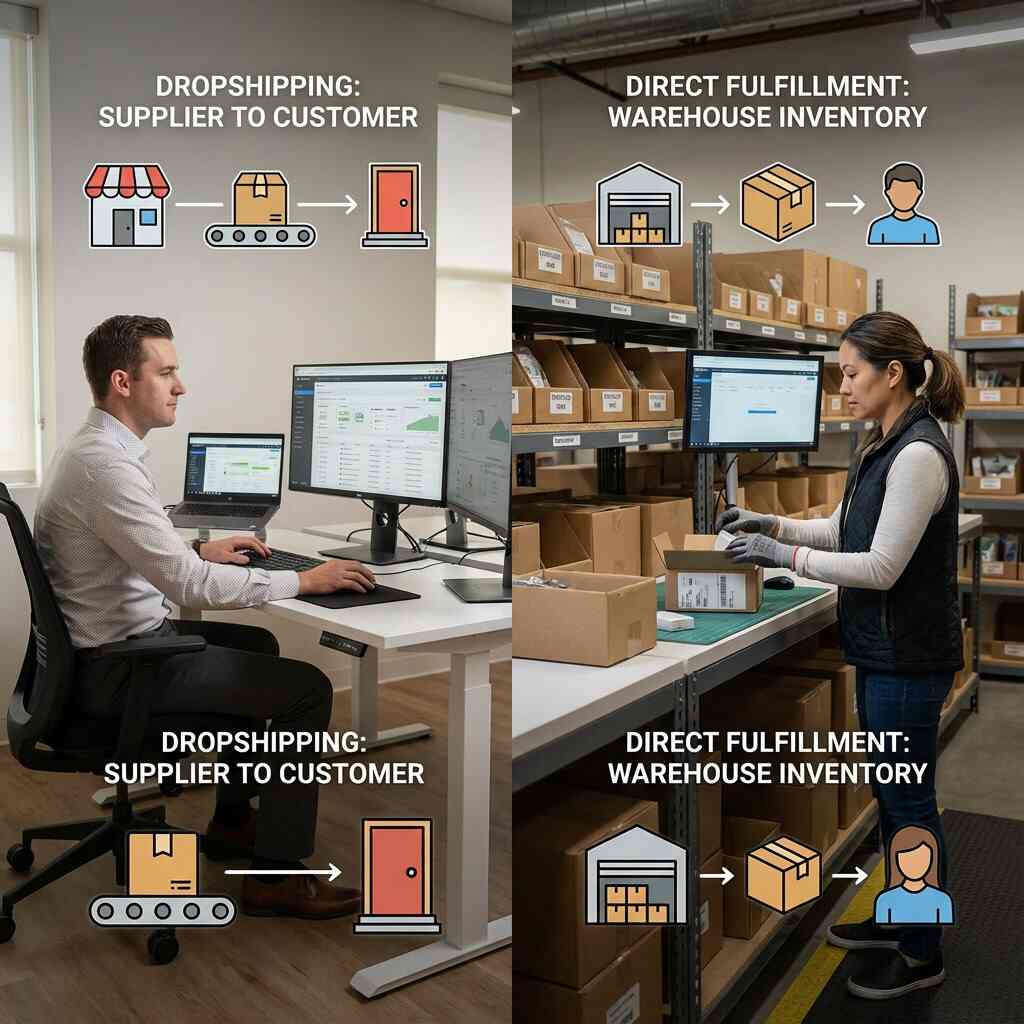
The core difference between dropshipping vs traditional ecommerce is inventory ownership. In dropshipping, you sell products without holding stock — your supplier ships directly to your customer. In traditional ecommerce, you purchase inventory upfront, store it yourself or with a fulfilment partner, and ship it when orders arrive.
Here is a quick comparison:
| Factor | Dropshipping | Traditional Ecommerce |
|---|---|---|
| Inventory | Not required | Required |
| Startup Cost | Low | High |
| Risk Level | Lower financial risk | Higher financial risk |
| Control | Limited | Full control |
| Shipping | Supplier handles | Seller handles |
| Branding | Limited | Strong |
| Profit Margins | Lower | Higher |
| Scalability | Fast initially | Stable long-term |
Both models are legitimate and profitable when used correctly. The right choice depends entirely on your current budget, your goals, and how much control you want over your customer’s experience. Keep reading for the full breakdown.
What Is Dropshipping vs Traditional Ecommerce — And Why Most People Get This Wrong
Before we compare dropshipping vs traditional ecommerce properly, we need to clear up the single biggest misconception in this entire debate.
Dropshipping is not the opposite of ecommerce. Dropshipping is a type of ecommerce. It is a fulfilment method — a way of processing orders — that sits inside the broader world of online retail. When people ask “dropshipping vs traditional ecommerce,” what they are really asking is: should I hold my own inventory, or should I let a supplier hold it for me?
That reframe matters. It means both models share the same foundation — you build a store, attract customers, process payments, and handle customer service. The difference is what happens the moment an order comes in.
In dropshipping, you forward that order to a third-party supplier who ships directly to your customer. And you never see the product. You never touch the packaging. You collect the difference between what the customer paid you and what you paid the supplier.
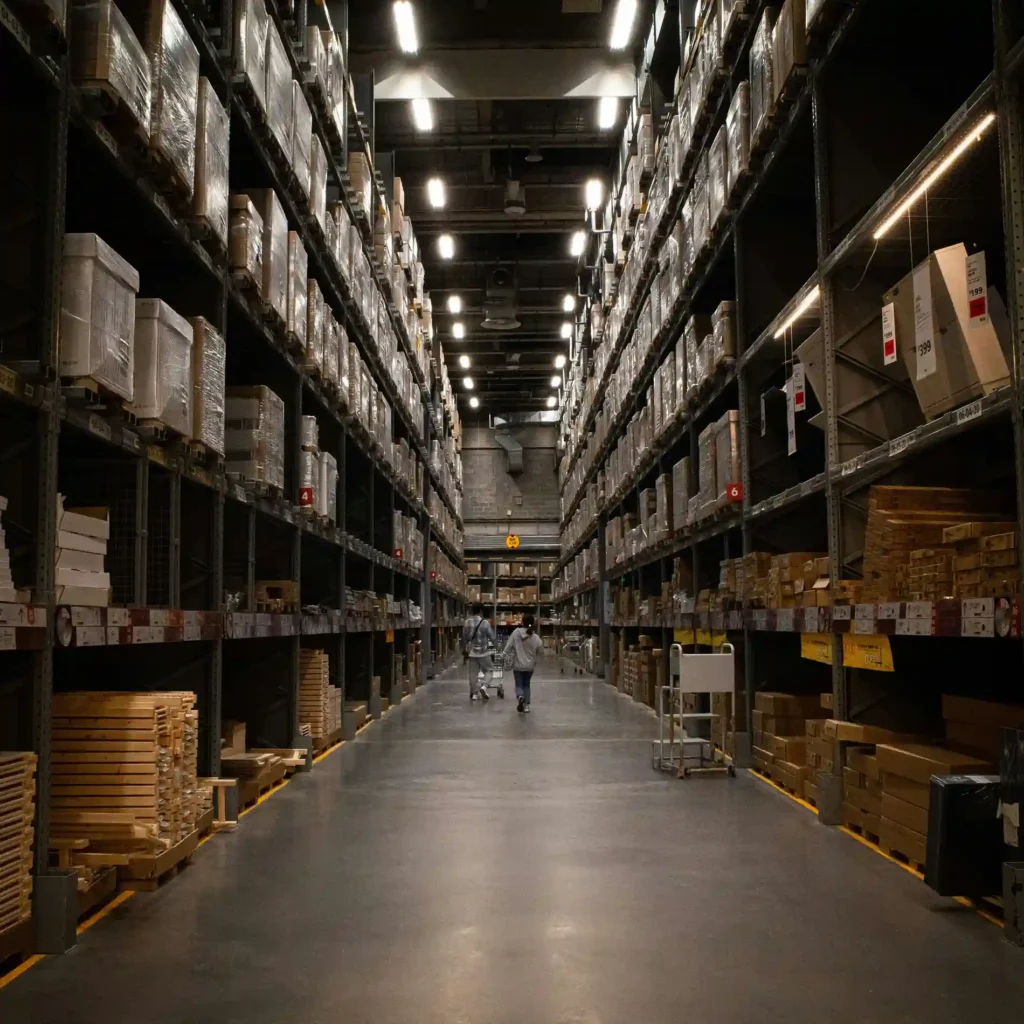
In traditional ecommerce, you already have that product sitting in a warehouse — either your own or a third-party logistics provider (3PL). When the order comes in, you or your fulfilment team picks, packs, and ships it.
Simple enough. But the implications of that single operational difference ripple through every aspect of running your business — and that is where things get interesting.
The Real Startup Costs — Including the Ones Nobody Mentions
Every comparison of dropshipping vs traditional ecommerce will tell you that dropshipping is cheaper to start. That is true. But the numbers you usually see are misleading because they leave out the hidden costs that catch new store owners off guard.
Dropshipping: What It Actually Costs
Yes, you can technically launch a dropshipping store for a few hundred dollars. But if you want a store that actually generates sales, here is a more honest breakdown:
Ecommerce platform (Shopify or WooCommerce hosting): $40–$105 per month. Paid advertising — and make no mistake, you will need paid ads because organic traffic takes 6–12 months to build: $500–$2,000 per month minimum to get meaningful data. Product samples so you can verify quality before selling: $100–$300. App subscriptions for supplier integration, review tools, upsells, and abandoned cart recovery: $80–$200 per month. A professional logo and basic branding: $50–$200.
Realistic first-month cost: $800–$2,800. Not $100. Not $500. And that advertising spend does not stop — it continues every month until your organic traffic and repeat customer revenue is strong enough to reduce your dependence on paid acquisition.
Traditional Ecommerce: Where the Money Actually Goes
Traditional ecommerce has a higher entry point, but the cost structure is more predictable and more controllable. You know your inventory cost upfront. You can negotiate better unit prices as you order more. And every dollar you spend on branding and packaging has a direct, measurable return in customer loyalty and repeat purchase rates.
Bulk inventory purchase for a focused product range: $2,000–$15,000. Warehousing or 3PL fulfilment setup: $300–$1,500 per month. Professional product photography: $300–$800. Custom packaging and branded inserts: $500–$2,000 for an initial run. Platform and tools: same as dropshipping.
Realistic startup cost: $5,000–$20,000. Significant, yes. But you are building something with real asset value from day one — inventory that can be sold, a brand that can be valued, and margins that reward your investment.
The Hidden Psychology of Each Model — What Nobody Talks About
Here is a section you will not find in most dropshipping vs traditional ecommerce comparisons: the mental and emotional reality of running each model. And it matters far more than most business guides acknowledge.
The Dropshipping Anxiety Loop
Dropshipping sounds liberating on paper. No inventory, no warehouse, work from anywhere. In practice, many dropshippers describe a persistent, low-level anxiety that comes from running a business where the most important parts — product quality, shipping times, stock availability — are completely outside their control.
You spend money on advertising. A customer buys. Your supplier is out of stock. You have to refund the customer, eat the ad spend, and start over. Or worse, the supplier ships a product that looks nothing like the listing photos, and now you are dealing with a chargeback and a one-star review for something you never even touched.
That loss of control is psychologically exhausting, particularly at scale. When you are processing 50 orders a day and relying on a supplier in another country to handle all of them correctly, the mental load of monitoring every order for problems becomes a job in itself.
The Traditional Ecommerce Commitment Weight
Traditional ecommerce has its own psychological challenge: the weight of commitment. When you have $10,000 worth of inventory in a warehouse, you feel it. Every slow week, every failed ad campaign, every quiet Monday morning is a reminder that that inventory needs to move.
That pressure, however, can be a powerful motivator. Many successful traditional ecommerce store owners say that having real money on the line sharpened their marketing, their product research, and their customer service in ways that running a low-risk dropshipping store never did.
The model you choose needs to match not just your budget, but your personality. If uncertainty and lack of control drain you, traditional ecommerce may suit you better despite the higher cost. If the idea of tying up capital in physical stock keeps you awake at night, starting with dropshipping may be the right move psychologically, even if the margins are thinner.
Profit Margins: The Full Picture
The standard comparison of dropshipping vs traditional ecommerce will tell you dropshipping margins are 10–30% and traditional ecommerce margins are 40–70%. Those numbers are broadly accurate but dangerously incomplete.
The Real Dropshipping Margin After Everything
Start with a product that sells for $40. Your supplier charges you $22. That is a $18 gross margin — 45%, which sounds great. Now subtract your actual costs.
Facebook or Google ad cost to acquire that customer: $12–$18 on a well-run campaign in a competitive niche. Transaction and payment processing fees: $1.50. App subscriptions allocated per order: $0.50. Customer service time if allocated honestly: $1–$2.
Your net margin on a $40 order: $0–$3. In many cases, dropshipping businesses are running at near-zero net profit while appearing profitable on paper because owners forget to allocate their advertising costs properly.
This is why so many dropshipping stores that look like they are doing well — processing hundreds of orders a month — suddenly collapse when their ad costs increase slightly or their supplier raises prices by 10%.
The Traditional Ecommerce Margin Advantage
When you buy 500 units of a product at true wholesale pricing and sell it under your own brand, the economics look dramatically different. That same $40 product might cost you $8–$12 per unit at volume. Your gross margin is $28–$32, or 70–80%. Your advertising cost is the same, but your net margin after all costs is $10–$18 per order — five to six times the dropshipping net margin.
And because you control the product quality and the unboxing experience, your repeat purchase rate is higher, your review scores are better, and over time your customer acquisition cost drops as word-of-mouth and organic traffic grow.
The Legal and Tax Reality of Dropshipping vs Traditional Ecommerce
This is the section almost no comparison article covers properly — and it is critically important for ecommerce store owners.
Sales Tax and VAT Complexity in Dropshipping
In dropshipping, the tax situation is more complex than most new sellers realise. In the United States, economic nexus laws mean that if your store sells above a certain threshold in a particular state — often $100,000 in revenue or 200 transactions — you may be required to collect and remit sales tax in that state, even if you have no physical presence there. With customers spread across multiple states and a supplier based in yet another location, your tax obligations can quickly become complicated.
In the UK and EU, VAT rules for cross-border ecommerce apply to dropshipping businesses, and failing to register and collect correctly can result in significant penalties.
Customs, Tariffs, and Import Compliance
If your dropshipping supplier is based in China — which the majority are — your customers’ orders are crossing international borders. Import duties and tariffs apply. In 2025–2026, tariff changes between the US and China have significantly increased landed costs for many product categories, squeezing already thin dropshipping margins further.
With traditional ecommerce, you import your inventory in bulk, declare it properly at the border, pay duties once, and then sell domestically. Your customers never encounter customs delays, unexpected import charges, or packages held at the border — all of which are real, reputation-damaging risks in dropshipping.
Consumer Protection Liability
In both the UK and EU, the retailer — not the supplier — is legally responsible for the product sold to the consumer. This means that as a dropshipper, if your supplier ships a faulty or dangerous product, you are legally liable to the customer even though you had no involvement in manufacturing or shipping. This is a legal reality that very few dropshipping guides acknowledge honestly.
Branding and Customer Lifetime Value: The Long Game
When evaluating dropshipping vs traditional ecommerce, most store owners focus on the short-term numbers. But the most important number in ecommerce is customer lifetime value — how much a customer spends with you over months and years, not just on their first purchase.
Dropshipping businesses typically have low customer lifetime value. Because the products are often commoditised and available from dozens of other stores, customers have no particular loyalty to your brand. They bought from you once, had a decent experience, and will probably buy the same or similar product from whoever shows them the next relevant ad.
Traditional ecommerce businesses, done well, build genuine brand loyalty. When a customer receives a beautifully packaged product with a personalised thank-you card, consistent quality, and fast delivery, they remember the brand. They come back. They tell their friends. And they leave reviews. Your customer acquisition cost amortises over multiple purchases rather than being written off against a single transaction.
This is why traditional ecommerce businesses can be sold for meaningful multiples — typically 2.5x to 4x annual profit — while most dropshipping stores have little to no exit value because the business lives and dies by the current ad account.
When Dropshipping vs Traditional Ecommerce Actually Makes Sense: Real Scenarios
Rather than another generic “choose dropshipping if you have low capital” summary, here are real scenarios where each model genuinely makes sense.
Choose Dropshipping If:
You have identified a specific product niche but have no data yet on whether customers will actually buy. Dropshipping lets you test without committing capital to inventory that might not move. You are learning ecommerce for the first time and need to understand ad platforms, store design, product listing optimisation, and customer service before risking significant money. You want to run multiple niche stores simultaneously to find which market responds best, then double down on the winner.
Choose Traditional Ecommerce If:
i.You have already validated demand — through dropshipping, through market research, or through an existing audience.
ii.You have identified a product where quality, branding and packaging materially affect
the customer’s decision to buy or return.
iii.You are building a business you intend to sell or raise investment for within three to five years.
iv.You are in a product category where delivery speed is a purchasing decision factor — home goods, gifts, pet products, baby products — because slow dropshipping delivery will kill your reviews.
The Hybrid Approach That Smart Operators Use
The most sophisticated approach to the dropshipping vs traditional ecommerce decision is not choosing one — it is using both deliberately at different stages. Start with dropshipping across a range of products to find your one or two best sellers. Once you have 200–300 orders on a product with consistent positive feedback, contact manufacturers, get samples, negotiate bulk pricing, and bring that product into inventory.
Keep dropshipping the rest of your catalogue until each product earns its place in your warehouse. This approach eliminates the guesswork from traditional ecommerce purchasing and prevents you from over-investing in products that look promising but do not convert.
Keyword Research: What People Are Actually Searching
Understanding the dropshipping vs traditional ecommerce landscape also means knowing what questions real store owners are asking. Beyond the main comparison, the most valuable related searches include: is dropshipping still worth it in 2026, dropshipping profit margin after ads, traditional ecommerce startup costs breakdown, how to transition from dropshipping to private label, dropshipping vs wholesale vs private label, ecommerce business models compared, and when to stop dropshipping and buy inventory.
If you are creating content or researching your options, these are the questions your competitors are ranking for — and the ones this article is designed to answer more completely than any of them.
The Exit Value Question Nobody Asks Early Enough
Here is something almost no dropshipping vs traditional ecommerce guide addresses: what happens when you want to sell your business?
Dropshipping stores are notoriously difficult to sell. Most business brokers will tell you that a dropshipping store with no proprietary supplier relationships, no exclusive products, and no real brand identity is worth very little — regardless of its revenue. Buyers know that the moment the current owner stops running ads, the revenue stops. There is no brand equity, no customer list with genuine loyalty and no defensible market position.
Traditional ecommerce brands — particularly those with private label products, a strong review profile, repeat customer revenue, and proprietary supplier relationships — sell for 2.5x to 5x annual earnings on platforms like Flippa, Empire Flippers, and Quiet Light. A business generating $100,000 in annual profit could sell for $250,000 to $500,000. That exit value is the compounded reward of every decision you made to control quality, build your brand, and invest in customer relationships.
If you ever intend to exit your ecommerce business — even if that is five or ten years from now — this consideration should influence your model choice from day one.
Frequently Asked Questions About Dropshipping vs Traditional Ecommerce
1. What is the difference between dropshipping vs traditional ecommerce?
The core difference between dropshipping vs traditional ecommerce is inventory ownership. In dropshipping, you sell products without holding any stock — your supplier ships directly to your customer. In traditional ecommerce, you purchase inventory upfront, store it yourself or with a fulfilment partner, and ship it when orders arrive. Everything else — the store, the marketing, the customer service — works the same way in both models.
2. Is dropshipping the same as traditional ecommerce?
No, but dropshipping is a type of ecommerce. The difference is fulfilment. In dropshipping your supplier ships orders for you. In traditional ecommerce you ship orders yourself from your own inventory. Both are ecommerce businesses — they just operate very differently behind the scenes once a customer places an order.
3. Which is more profitable — dropshipping or traditional ecommerce?
Traditional ecommerce is more profitable long term. Gross margins of 40–70% are standard compared to 10–30% for dropshipping. However, dropshipping can reach profitability faster because startup costs are lower, meaning you break even sooner on a smaller initial investment. The model you choose depends on whether you are optimising for speed of profitability or size of profitability.
4. How much money do I need to start dropshipping vs traditional ecommerce?
You can start dropshipping for $300–$1,000 realistically, though you will need an ongoing advertising budget of at least $500 per month to generate consistent sales. Traditional ecommerce requires $5,000–$20,000 to cover inventory, warehousing, photography, and initial marketing. The gap in startup cost is real, but so is the gap in long-term returns.
5. Which model is better for complete beginners?
Dropshipping is generally better for beginners because the financial risk is lower while you are learning advertising, store design, product research, and customer service. Think of it as paid education with a much lower tuition fee. Once you understand the fundamentals, transitioning to traditional ecommerce with a proven product becomes significantly less risky and more rewarding.
6. Can I do dropshipping and traditional ecommerce at the same time?
Yes, and many experienced store owners do exactly this. The hybrid approach involves dropshipping unproven products to test demand, then bringing your best sellers into inventory once you have consistent sales data. This eliminates guesswork and prevents you from over-investing capital in slow-moving stock before you know what your customers actually want.
7. Why is my dropshipping profit so low even though my revenue looks good?
This is one of the most common problems in dropshipping. Revenue looks healthy until you subtract advertising costs, transaction fees, supplier price increases, returns, refunds, and monthly app subscriptions. Many dropshipping businesses running $30,000 in monthly revenue are netting less than $2,000 after all real costs are accounted for. Always calculate your net margin, not your gross margin, before deciding whether a product is worth scaling.
8. Is dropshipping still worth it in 2026?
Yes, but it is significantly more competitive than it was five years ago. The global dropshipping market is projected to grow at 22% annually through 2030, so genuine demand exists. What has changed is that success now requires real product research, a differentiated store experience, and a consistent advertising strategy. Simply finding a viral product and copying a competitor’s ads is no longer a reliable path to profit.
9. How long does it take to make money with dropshipping vs traditional ecommerce?
A well-run dropshipping store can reach profitability within 3–6 months with consistent marketing investment and smart product selection. Traditional ecommerce typically takes 6–18 months to recover the initial inventory investment and reach sustained profitability. The wait is longer, but the monthly profit once established is substantially higher and far more stable.
10. What are the biggest hidden risks in dropshipping that nobody talks about?
The most underreported risks include your supplier raising prices without notice and wiping out your margins overnight, suppliers selling the same product directly on Amazon and competing against your own store, customs delays causing your customers to receive packages weeks late with no warning, and your legal liability for faulty or dangerous products you never touched, inspected, or had any control over.
11. What are the biggest risks in traditional ecommerce?
Overstocking is the primary risk — buying 1,000 units of a product that stops selling leaves you with tied-up capital and mounting storage fees. Other significant risks include seasonal demand swings that leave you cash-poor at the wrong time, supplier minimum order quantities forcing early over-investment, and the operational complexity of managing fulfilment accurately at scale without expensive mistakes.
12. Which model is better for SEO and organic traffic growth?
Both models benefit equally from SEO in the short term, but traditional ecommerce brands tend to rank higher and build authority faster over time. A stronger brand identity earns more backlinks, generates more repeat visitors, and accumulates more branded searches — all of which Google uses as trust signals when deciding how to rank your pages. Dropshipping stores built around commodity products with weak branding typically struggle to earn the domain authority needed to compete long term.
13. Can I build a real brand with dropshipping?
You can build initial brand awareness through dropshipping, but building a truly memorable and loyal brand without control over your product quality and packaging is extremely difficult. Brand loyalty is built through consistent, exceptional customer experiences. When your fulfilment is handled by a third-party supplier whose priorities are not aligned with your brand standards, delivering that consistency becomes nearly impossible at scale.
14. Is dropshipping legal in 2026?
Yes, dropshipping is completely legal worldwide. However, you must comply with consumer protection laws in your selling market, collect and remit sales tax or VAT correctly, and ensure the products you sell meet safety and labelling requirements in your customers’ countries. Selling counterfeit goods, misrepresenting products, or refusing legitimate refunds are illegal practices regardless of which business model you are using.
15. Do I need a business licence for dropshipping or traditional ecommerce?
In most countries, yes. If you are generating revenue from selling products online, you are required to register your business, obtain the relevant tax identification numbers, and potentially collect VAT or sales tax depending on your location and where your customers are based. Requirements vary significantly by country and region, so always consult a local accountant or tax professional before launching your store.
16. Which model is easier to sell as a business when you want to exit?
Traditional ecommerce businesses — particularly those with private label products, a strong review profile, repeat customer revenue, and proprietary supplier relationships — are significantly easier to sell. They typically command valuations of 2.5x to 5x annual profit on business marketplaces. Dropshipping stores with no exclusive products and heavy dependence on paid advertising have very low exit value because the business effectively stops generating revenue the moment the current owner stops running ads.
17. What is high-ticket dropshipping and is it better than regular dropshipping?
High-ticket dropshipping involves selling products priced at $200–$2,000 or more, such as furniture, fitness equipment, or specialist tools. Because each sale generates a much larger absolute profit, you need far fewer sales to cover your advertising costs. However, high-ticket products require stronger sales copy, significantly more customer trust-building, and longer decision cycles — making them considerably harder to convert for beginners without experience in sales and persuasion.
18. How do returns and refunds work in dropshipping vs traditional ecommerce?
In traditional ecommerce, you receive the returned item directly, inspect it, and restock or dispose of it — giving you complete control over the returns process and the customer experience. In dropshipping, returns are more complicated because you must coordinate between the customer and the supplier simultaneously. Many overseas suppliers do not accept returns at all, meaning you absorb the full cost of refunding the customer while also losing the product entirely.
19. Which model works better for selling on Amazon?
Amazon FBA — Fulfilment by Amazon — is essentially a form of traditional ecommerce where you send inventory to Amazon’s warehouse and they fulfil orders on your behalf. Amazon has strict and well-enforced policies against dropshipping on their platform where orders are fulfilled by third-party suppliers without Amazon’s involvement. This makes traditional ecommerce the safer, more sustainable, and more scalable model for Amazon sellers in 2026.
20. Should I choose dropshipping or traditional ecommerce if I already have a social media audience?
If you already have a genuine, engaged social media audience that trusts you, traditional ecommerce will almost always generate better results. You already have the hardest element of ecommerce solved — an audience that pays attention to you. Investing in a quality private-label product you can stand behind confidently will generate far more repeat purchases, referrals, and long-term revenue than dropshipping a generic product your audience could find on dozens of other stores.
21. What is the single most important factor when choosing between dropshipping vs traditional ecommerce?
Proven demand. Do not commit capital to either model without real evidence that customers are willing to pay for what you are selling. Use dropshipping, social media polls, or pre-order campaigns to validate demand before investing in inventory. Once you have real orders and real customer feedback, you will know exactly what to stock, how much to invest, and which model gives you the strongest return on that investment.
22. How does customer trust differ between dropshipping vs traditional ecommerce stores?
Customer trust is significantly easier to build in traditional ecommerce. When you control product quality, packaging, and delivery speed, you can consistently deliver on your promises — and consistency is the foundation of trust. Dropshipping stores frequently struggle with trust because inconsistent delivery times, packaging quality, and product accuracy damage the customer relationship before it has a chance to develop. Trust is what drives repeat purchases, and repeat purchases are what make an ecommerce business truly profitable.
23. Which model handles peak season demand better — dropshipping or traditional ecommerce?
Traditional ecommerce handles peak season demand far more reliably. Because you hold your own inventory, you can prepare for Black Friday, Christmas, or Eid in advance by stocking up before the rush. In dropshipping, peak season is when supplier stock runs out fastest, shipping delays are longest, and customer complaints are highest — all at exactly the moment when your advertising spend is at its peak. Many dropshipping businesses lose their most profitable season to supplier failures they had no way to prevent.
Conclusion: The Honest Answer to Dropshipping vs Traditional Ecommerce
There is no universally right answer to the dropshipping vs traditional ecommerce debate. But there is a right answer for you — and it depends on where you are right now, not where you hope to be.
If you are starting out, have limited capital, and need to learn the mechanics of ecommerce without betting everything on a product that might not sell — start with dropshipping. Use it as a school, not a destination.
If you have validated demand, have capital to invest, and are serious about building a business with real brand value, repeat customers, and a meaningful exit opportunity — traditional ecommerce is where you need to go.
And if you are somewhere in between, start building your hybrid. Dropship to find your winners. Then own them.
At HireecomExperts.com, we help ecommerce store owners at every stage of this journey — from choosing the right business model and setting up your first store to scaling an established brand with advanced SEO, conversion optimisation, and fulfilment strategy. If you are ready to make the right move for your business, get in touch with our team today.

Founder of HireEcomExperts.com — a platform helping online entrepreneurs find trusted Fiverr freelancers for Shopify, dropshipping, Amazon FBA, and digital marketing. Website Developer and SEO specialist with hands-on experience in ecommerce growth strategies.